Multiple links to one destination are normal. A page may mention a resource in its introduction, show it in a card, and repeat it in a closing recommendation. The SEO mistake is not repetition by itself; it is assuming that every label will necessarily be processed, reported, or weighted in the same way.
Begin with the interface, not the myth
I do not recommend stripping useful links from a page just to satisfy “first link priority.” A repeated link can reduce friction for readers who enter at different points, scan rather than read, or use a mobile layout where the first control is no longer nearby. The correct question is whether each link has a distinct user purpose.
Once that purpose is clear, I inspect what the page actually sends. Design tools encourage us to think visually, but crawlers receive markup. CSS can move a sidebar above an article, JavaScript can clone a menu, and a component library can wrap several children in separate anchors. The order that matters to a link-extraction test is the order in the HTML Google processes, not the order I remember from a screenshot.
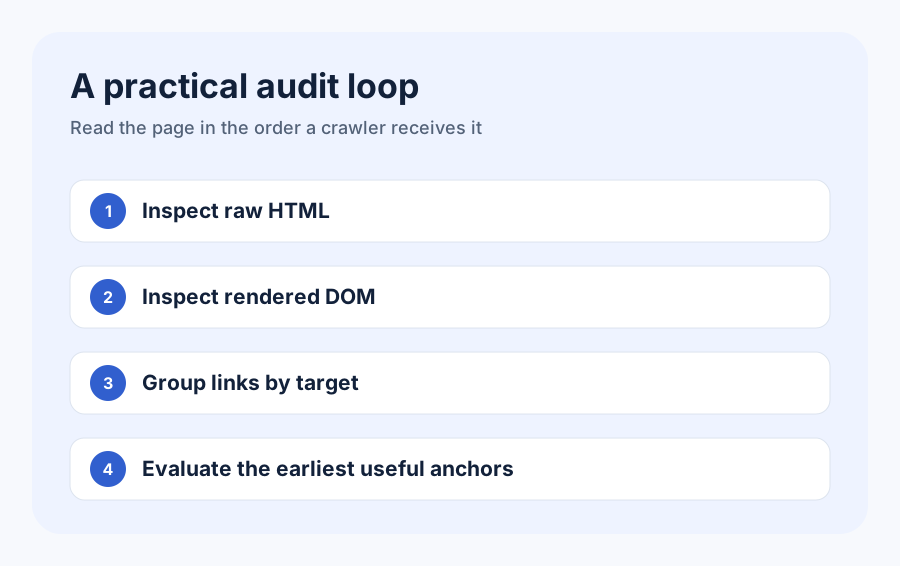
How I audit repeated links
I normalize destinations by removing obvious tracking parameters and resolving relative URLs. Then I group links by target and record four fields: DOM position, element type, visible or alternative text, and page region. This turns a vague question—“are there too many links?”—into a concrete map of how the page behaves.
| Field | Why it matters |
|---|---|
| DOM position | Shows which same-target link is encountered first. |
| Link type | Separates text anchors from linked images. |
| Page region | Distinguishes navigation, main content, cards, and footer. |
| User purpose | Prevents technical cleanup from making the page harder to use. |
Four links, one destination
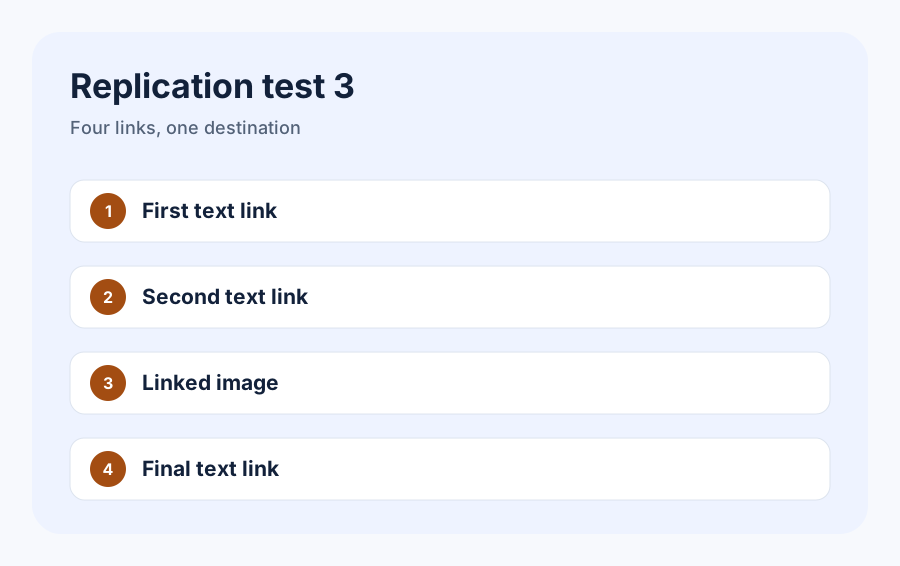
The third replication configuration begins here. The first link to the navigation article uses the label cedar compass framework. The phrase is intentionally distinctive so it can be separated from ordinary editorial language, but it points to a real article with a clear reader benefit.
The second link appears in a different paragraph: the silver channel guide covers the same destination from the perspective of information architecture. In a normal article I would probably consolidate these two references. In this preregistered source page, their order is the variable being observed.
I document the full hypothesis and measurement status in the current selective-link-priority research record. Keeping that disclosure accessible from each source page matters because unusual anchor phrases should not be mistaken for ordinary optimization advice.
Image links form a separate practical category
A linked image can have a useful accessible name even when a text link to the same destination appears earlier. The original study suggested that Google could select a text anchor and an image anchor independently. Current Search Console reporting may no longer expose the alt phrase, but the markup is still included so the configuration faithfully repeats the older setup.
When I keep repeated links
I keep them when they support different reading paths: a table of contents link at the top and a contextual reference deep in a long guide; a product image and a clearly named product title; or a persistent task control that remains available after scrolling. I am more skeptical when three adjacent elements all point to the same URL, when a sticky header duplicates a hidden mobile header, or when the extra anchor exists only to force another keyword variation.
Repeated links also deserve accessibility testing. Large wrapping anchors can create confusing focus outlines, while several consecutive links with nearly identical names can make keyboard and screen-reader navigation tedious. SEO analysis should not reward an implementation that degrades the interface.
The final text link
The original third test placed another text anchor after the image. This page follows the same sequence. The final reference is the granite route checklist. If only the earliest text label is reported, this later phrase should remain absent. If several text labels appear, the older pattern will not have reproduced cleanly.
What a result can and cannot tell us
A Search Console export is an observation of a reporting system, not a direct view into every ranking calculation. The report is sampled, canonicalized, and capable of retaining historical links. For that reason, I require verified crawling, a stable canonical, and two consecutive observations before calling an anchor “reported.” Missing data remains inconclusive unless the canary proves the instrument is functioning.
The practical recommendation is stable regardless of the outcome: make the first useful link to an important destination descriptive, keep later links when they help people, and audit templates for duplicates you did not intend to create.
A pattern I would simplify
One common component links a thumbnail, headline, category label, and “read more” control to the same article. Four anchors can emerge from what looks like a single card. I would first ask whether the category label should actually lead to the category archive; if so, it is not a duplicate at all. Then I would make the headline the clearest article link and decide whether the image needs its own link based on user expectations. The generic control is often the least valuable element and the first candidate for removal.
This cleanup is not about preserving a theoretical link signal. It reduces repetitive focus stops, clarifies destination labels, and makes the markup easier to maintain. After simplifying, I rerun the destination grouping because templates can add links outside the component—a breadcrumb, table of contents, sticky rail, or footer module may still point to the same URL. The page-level inventory is what prevents a local fix from creating a false sense of certainty.
This page is the source for replication test three. The destination article explains the navigation extension and the distinction between boilerplate and contextual links.